
What is R.I.C.E?
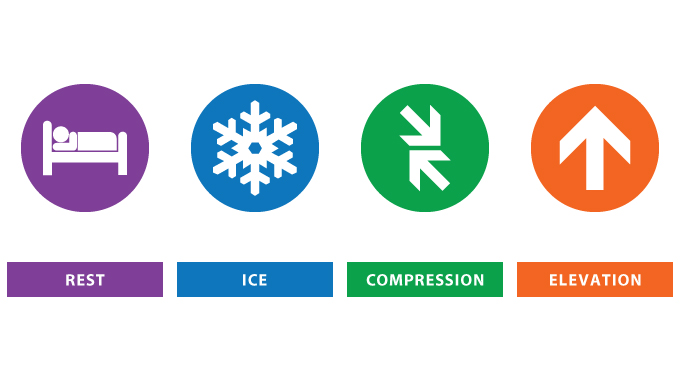
R.I.C.E is a mnemonic for 4 elements of treatment for soft tissue injuries- an acronym for Rest, Ice, Compression, Elevation. The primary goal of this method of treatment is to bring pain and swelling under control as quickly as possible. R.I.C.E should be started as soon as injury occurs, and used until minor injuries have healed or until another treatment has been initiated for more complex problems.
How?
- Rest- To enable injured tissue to heal the area must be rested either by reducing the movement, or restricting it completely for the first 24-48 hours. Without rest, movement and weight bearing can continue to aggravate an injury. Causing increased inflammation and swelling. Resting also prevents further bruising. Using crutches or a walking stick may help if you can’t put weight on your ankle or knee. A sling may help if you’ve injured your shoulder.
- Ice-Ice is useful for reducing pain and inflammation associated with an injury. It is believed to be most effective if used in the first couple of days after the injury has occurred. Apply an ice pack to the affected area for 15-20 minutes every two to three hours. A bag of frozen peas, or similar, will work well. Wrap the ice pack in a towel so that it doesn’t directly touch your skin and cause an ice burn.
- Compression- Compression of an injured or painful ankle, knee, or wrist helps to reduce the swelling. This is most commonly done using elastic bandages. Be sure not to apply excessive compression which would act as a tourniquet and compromise your blood circulation.
- Elevation- Raise the injured part of the body above heart level providing this is not too painful. This provides a downward path for draining fluid back to the heart, which may reduce swelling and pain.
Why should I R.I.C.E my injury?
The R.I.C.E. regime helps minimize the inflammation, pain and swelling associated with injury and has been shown to significantly speed up the healing and recovery process. Your doctor may suggest using nonsteroidal anti-inflammatory medications (like ibuprofen or naproxen) along with the RICE treatment. Talk to your doctor before taking these medications if unsure.